The two months grace period of 2013 has given me a chance to catch up on most, if not all, of the movies from 2012 that I need to see. So, Oscars be damned, here is the most important awards show of the season: the TORTUROUSLY OKAY HONORS 2012.
Performances of the Year (Leading)
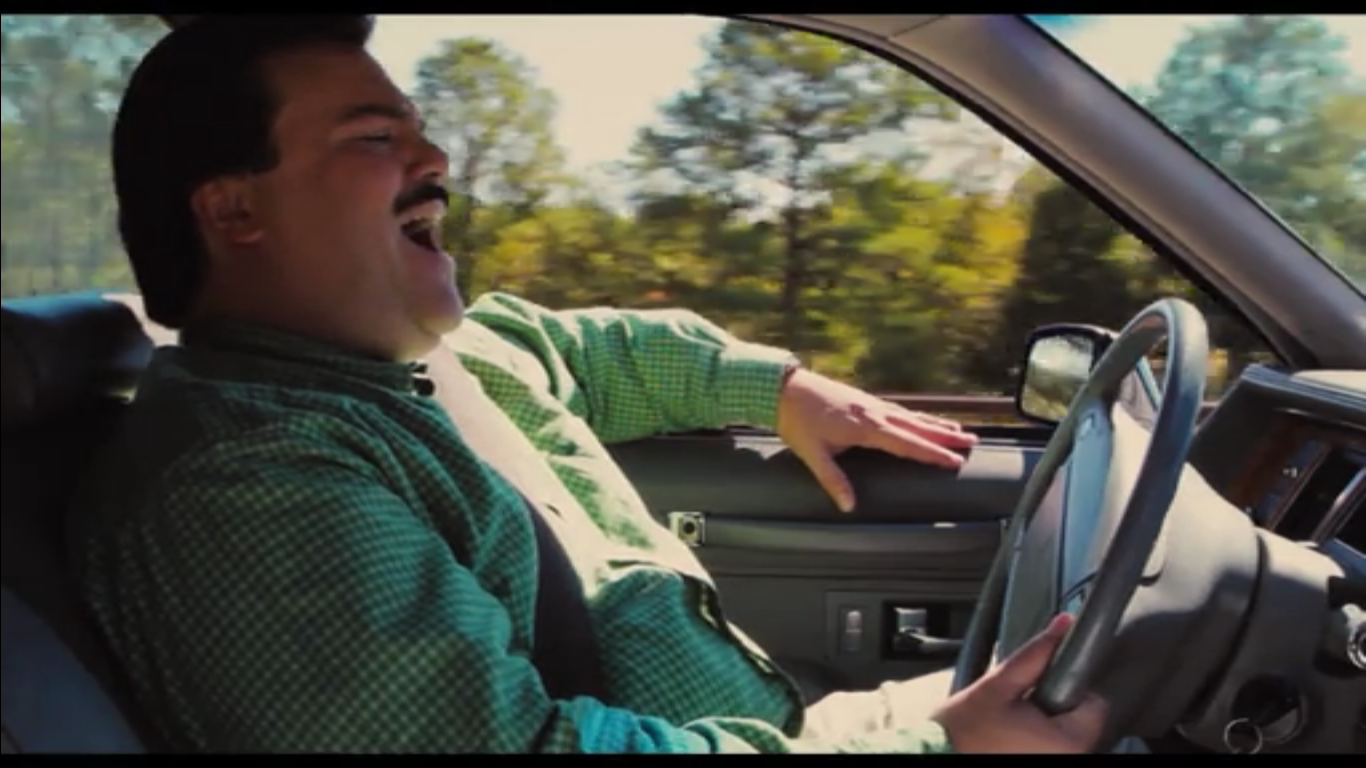
Jack Black, Bernie
Quvenshane Wallis, Beasts of the Southern Wild
Six-year-old Wallis is a rock solid foundation for the enthralling film, and our guide through a mesmerizing world that I must admit I've never seen before. She's Hushpuppy, a young girl who lives in a borderline-indigenous community in Louisiana called the Bathtub, separated by hurricanes from the mainland. Beasts is a wonderfully funny, sad, sometimes fantastical film told completely through Hushpuppy's eyes, and Wallis holds up the film superbly.
Jennifer Lawrence, Silver Linings Playbook
Lawrence takes what could have been your average magical pixie girl and gives her life. The premise of the film threatens to make her Tiffany into a plot device, but Lawrence makes her into a real person and one of the most memorable screen characters of the year. I was worried she'd relegate herself to being the Hunger Games girl for the rest of her career, but this film proves that she certainly will not.
Liam Neeson, The Grey
Though it may appear that way, The Grey is not another in the long line of Neeson-led brainless action films. In addition to being a ruthless, terrifying thriller, it's a meditation on what men become when they're stripped of their humanity and forced to face the bare elements: after a plane crash, a group of workers at an Alaskan oil rig is forced to find a way to survive. Neeson gives one of his best performances as a man who comes from the brink of suicide and transforms into a natural leader. His most memorable moment, I think, is his heartbreaking speech to a dying man (Joe Anderson), which no other actor could have pulled off: it begins, "You're going to die. It's okay."
Bradley Cooper, Silver Linings Playbook
Like screen partner Lawrence, Cooper gives a performance here, as an undiagnosed bipolar phys ed teacher with a violent streak, that ensures he'll not be shoehorned as the Hangover schlub. Were it not for Day-Lewis, he'd be the sure winner.
Jared Gilman, Moonrise Kingdom
As young Sam, the romantic lead of Wes Anderson's charming adventure-fantasy, Gilman represents the kind of unblinking confidence combined with relative inexperience of adolescence. This is my favorite Anderson film to date, and Gilman makes for a supremely likable hero.
Channing Tatum, 21 Jump Street
Now this was a surprise. I wasn't expecting 21 Jump Street to be any good, much less the funniest film I'd see all year, which it turned out to be. And I sure as hell wasn't expecting Tatum's to be the performance I'd be heralding, but it was. Tatum, whose experience beforehand has been mainly in iron-jawed action films, slick battle-dance movies, and weepy love stories, is a surprisingly ept comic actor. Playing the dumb jock to Jonah Hill's nerd, Tatum takes to the role of straight man quite well. He's got a future.
Christoph Waltz, Django Unchained
Ever reliable, Waltz creates a character here in bounty hunter/dentist Dr. King Schultz that is the flipside of his vicious Hans Landa in Inglourious Basterds. He's tenacious, cunning, and slightly foppish, though this time he's on the good side.
Denzel Washington, Flight
It's difficult to play a functioning alcoholic as anything but a caricature, but Washington carefully avoids parody in the role of Whip Whitaker, an airline pilot who bravely lands a doomed commercial plane with minimal casualties while under the heavy influence of alcohol and cocaine. Robert Zemeckis's film wisely doesn't moralize--there's no question that Whip exhibits utmost professional behavior while drunk, and it's his expertise that saves dozens of people--but the film explores how the crash brings to light the lies he's been telling himself and others, and challenges him to become a better person.
Sam Rockwell, Seven Psychopaths
Martin McDonagh is among the best playwrights currently working, and his feature debut In Bruges is one of the best films in recent years. Seven Psychopaths is a less cohesive piece of work, and its more introspective moments aren't as successful as the splatter comedy moments are, but Rockwell's performance is a standout. His Billy is the cinematic equivalent of the mentally challenged brother Michal in McDonagh's "The Pillowman": he's the best friend of screenwriter Marty (Colin Farrell) and provides the inspiration for much of his work, but may be taking his job much too seriously. Rockwell plays a man who is blissfully unaware of the destructive consequences of his actions, yet whose friendship is so genuine that Marty can't bear to let him go.
Performances of the Year (Supporting)
Samuel L. Jackson, Django Unchained
Jackson's performance as the house slave Stephen is the saddest in the film: he's a man who's despised on all sides and who has traded his dignity for the convenience of a slightly more comfortable life. He essentially plays two characters: he's a minstrel-show actor in public, and a devious and intelligent snake in private. This is Jackson's best performance to date and the best performance I've seen all year.
Michael Fassbender, Prometheus
I've made no secret of my dislike for Ridley Scott's fumble of an Alien prequel-slash-meditation on the creation of humanity, but the movie is worth seeing for Fassbender's performance alone. He plays the android David, who in the years his human counterparts have been asleep on their space journey has learned much about humanity and about his own existence. He provides a foil for the movie's great question: what if you meet your maker, and your maker hates you? David knows the answer; his human partners are about to find out.
Dwight Henry, Beasts of the Southern Wild
As the father of the young Hushpuppy, Henry gives a bold performance that is every bit as good as Quvenshane Wallis's. His Wink is a bombshell: hardheaded, stubborn, sometimes overly harsh on Hushpuppy, but his relationship with her is warm and believable, and is why the last moments of the film are so moving.
Robert De Niro, Silver Linings Playbook
De Niro perfectly embodies the kind of father that the aggressive Pat (Bradley Cooper) would have: an obsessive-compulsive bookmaker who needs to put everything in the universe in the right place so the Eagles can win.
Hannah Fierman, V/H/S

Mark Ruffalo, The Avengers
The first actor to successfully tackle the Hulk, Ruffalo plays the character wisely as a man who's putting himself through the most painful kind of anger management there is. Ruffalo's Hulk is, as he professes, always angry, and there always appears to be something bubbling underneath the surface.
Alan Arkin, Argo
As "producer" Lester Siegel, Arkin is a perfect representation of the downright loony side of this plot: he channels Zero Mostel in The Producers as a down-and-out Roger Corman-like producer who's tasked with making a fake sci-fi movie for the CIA.
Bradley Whitford, The Cabin in the Woods
Whitford is perfectly cast alongside Richard Jenkins as a bureaucrat who essentially writes a horror movie for a real-life cast.
Jacki Weaver, Silver Linings Playbook
As Bradley Cooper's mom, Robert De Niro's wife and thus the most level-headed person in the household, Weaver perfectly plays a woman struggling lovingly to create a healthy environment for her very unstable family.
Matthew McConaughey, Bernie
In a movie where the hero is a coldblooded murderer, McConaughey plays the villain, a stiff-shirt D.A. who brags about the phony sweepstakes schemes he uses to catch deadbeat dads. McConaughey is perfectly heartless and by-the-book, and though he's morally on the right side, he's despicable and sleazy while Bernie is genuine and sweet.
The Ten Best Pictures of the Year
10. THE AVENGERS
A full-bodied actioner at its finest, and a rare ultra-high-budget, high-concept Hollywood movie that gets it exactly right. Joss Whedon, who created Buffy the Vampire Slayer and appears on this top-ten list more than once, ties together this gargantuan franchise cleverly. Considering that this is a combination of four Marvel franchises, and adds several key characters of its own, The Avengers is light on its feet, funny, well-acted by its all-star cast, and very entertaining.
9. LOOPER
Rian Johnson is one of the smartest screenwriters working, and his Looper is an often brilliant piece of sci-fi. Like the Back to the Future trilogy, it takes time travel at face value, accepts its paradoxes rather than challenge them, and creates a compelling story set on different planes of time. Bruce Willis gives one of the most complex, heartfelt performances of his career as a former hit man sent back in time to be killed by his past self (Joseph Gordon-Levitt, amazingly Bruce Willis-like). Jeff Daniels is terrifically odd as a mob boss from the future who runs operations in the past, and the unjustly overlooked Paul Dano is excellent as a particularly vulnerable hit man.
8. LES MISERABLES
A great film version of a pretty good musical.
7. 21 JUMP STREET
This would appear to be a strange vehicle for Jonah Hill, who plays a lead role and co-wrote the script alongside Michael Bacall. Not only is it a 21st-century update of a late-'80s crime drama that I’ve never watched, but it’s a self-referential, ironic and hip comedy version. The idea of updating once-serious TV shows as modern comedies is pretty much a fluke, having peaked with the fun Stiller-and-Wilson Starsky & Hutch, and hit its low with the lame Nicole Kidman/Will Ferrell Bewitched debacle. But because it's cleverly written and directed by skilled comic minds (animators Phil Lord and Christopher Miller), it works. Hill and Channing Tatum are likable as the two leads, and much of the movie works because we care about their characters and their relationship.
6. MOONRISE KINGDOM
Wes Anderson's career has not been spotless, but he is adept at portraying the adolescent mind, as well as the mind that is trapped in adolescence. This movie, a storybook fantasy about a young boy (Jared Gilman) and girl (Kara Hayward) who run away from home together, is the sort of thing Anderson does best. Frances McDormand, Bill Murray, and Bruce Willis appear as adult characters who have adolescent tendencies themselves.
5. BEASTS OF THE SOUTHERN WILD
A truly one-of-a-kind film.
4. THE GREY
The Grey is an unrelenting thriller in which its all-male cast is put to the ultimate test. After a plane crash leaves them stranded in the middle of the Alaskan tundra, with no help coming their way, a group of oil rig workers have to brave the elements to make their way to safety, and must escape a pack of hungry wolves who are defending their territory. After his jokey Smokin' Aces and The A-Team, director Joe Carnahan delivers a brutal, honest, nervewracking film that grabs you and doesn't let go until long after the final shot.
3. BERNIE
Jack Black plays Bernie Tiede, an unassuming young assistant funeral director who's never told a lie in his life, short of maybe upselling some customers on a coffin. He sees the good in everybody in the small Texas town he moves into. He even sees the good in old Marjorie Nugent, the mean, nasty widow of a well-liked banker. He befriends her, moves into her house, and then one day he shoots her in the back four times and kills her.
The genius of Richard Linklater's Bernie is that it does not excuse Bernie's crime or justify it, but convinces us that Bernie is a good soul all the same. Though he's done a bad thing, he is still a genuinely good person, and his good deeds continue long after the murder. Black creates a character so darned likable and pure that we understand his actions and we like him anyway. That Bernie received no Oscar nominations is a downright shame.
2. THE CABIN IN THE WOODS
It's rare that my best film of the year is ever a horror movie, since there are rarely any great ones nowadays. It's even more rare that my two best films of the year are both horror movies.
Although I don't quite know if I can call The Cabin in the Woods a horror movie. It's more of a movie about horror movies. What I can say is that from beginning to end, it's hilarious, exhilarating, and, yes, sometimes pretty scary. Every scene is dastardly clever, right from the unexpected cut after the opening credits to the abrupt conclusion. The setup--a bunch of kids go to stay at a scary cabin in the woods--is right out of Evil Dead, and the sub-plot in which the bureaucrats down below (Richard Jenkins and Bradley Whitford) run the whole operation is a perfectly askew way to view the idea of a horror movie. Vague references are made to higher-ups as well as a "director." Who are they working for?
Well, they're working for us. We are the people who are demanding that these kids be stabbed, shot, flayed, crushed, blown up, whatever, for our amusement. The Cabin in the Woods, directed by Drew Goddard from a screenplay he wrote with Joss Whedon, is a brilliant satire of the making of a horror movie, and it points at the silliness of the outright barbarism that is portrayed for our enjoyment.
If you haven't seen the film, I haven't spoiled it. The last half-hour of the film... well, let's just say that there was a point at which I wondered, "Will they?" And they did. The Cabin in the Woods is a gleeful mishmash of everything that we horror fans hold dear into one gigantic melange of bloody, oozy insanity.
Which brings me to...
1. SINISTER
Sinister is the flipside of The Cabin in the Woods. Both are essentially satires of horror conventions, but while Cabin looks at them from a right angle, Sinister takes them seriously. Director Scott Derrickson walks a fine line in making a horror movie that essentially wags its finger at horror films, but he pulls it off.
Sinister is an indictment of the kind of "torture porn" that is prevalent in mainstream horror nowadays. The inclusion of several snuff films throughout the movie is risky, but Sinister never seeks to inspire the kind of sick joy that many horror films do in the mangling of human beings. It keeps a straight face throughout, creates characters we can identify and sympathize with, and gives them the same half-disgusted, half-intrigued approach to the horror that we are given.
Sinister is chilling, and features the best boogeyman character I've ever seen in films. Its score, by Christopher Young, is also among the best that has ever accompanied a horror film. There is no memorable theme that stands out, but Young creates ambient sound that is perfectly incorporated into every scene.
Honorable Mentions
Django Unchained: I had issues with this film upon first viewing, and I still do. It's the only Tarantino film to date to have serious issues with tonal shifts: it goes back and forth from goofy jokes to whips and chains without much transition. But Tarantino also breaks new ground by tackling a serious subject for the first time. And I take back my final criticism of the film, in which I pondered what it might have been like if Sam Jackson's Stephen redeemed himself in the end. The movie couldn't have ended that way, because there was no redemption in slavery. All the torture in the film is left purposely hanging there. The guy gets his girl in the end, and that is as happy an ending as we will get.
Dredd: This little action movie went mostly overlooked, at least in the U.S. Remaining faithful to the comic book character on which it's based, as opposed to the Sylvester Stallone-headlining monstrosity Judge Dredd of 1995, Dredd is an exciting action flick that inhabits a post-apocalyptic universe where the fascist is the hero, and the movie is unapologetic about it. Karl Urban reportedly took the role on the condition that Dredd would never remove his mask, and he never does.
The Five Worst Pictures of the Year
5. THE POSSESSION
Though well-acted, this Jewish Exorcist knockoff just doesn't cut it. It starts well, with a great opening, a great possessed child (Natasha Calis), and a hell of a scary box at the center of the story, but by the time Matisyahu shows up as a rabbi exorcist, it's gone off the rails.
4. TIM AND ERIC'S BILLION DOLLAR MOVIE
I appreciate that Tim Heidecker and Eric Wareheim made the movie they wanted to make, the movie that made them laugh. It didn't particularly make me laugh, but good for them anyway.
3. THE RAVEN
John Cusack is a great Edgar Allan Poe, but quoth the raven, "This movie sucks."
2. HOUSE AT THE END OF THE STREET
Sheesh. This year's sure Oscar winner for Best Actress, whose name I hesitate to mention alongside this film, remains untainted since this movie was in the can before Winter's Bone came out. Elisabeth Shue and Gil Bellows, however, have no excuse.
1. THE WICKER TREE
This was a real disappointment. I'd been awaiting Robin Hardy's sequel to The Wicker Man ever since Neil LaBute mucked it up with his horrible remake in 2006. Sad to say, this sequel is just as much a retread of the original, and even worse.
More Honors
Best Film to Star Matt Damon or Ben Affleck: Argo.
The Christopher Walken Stolen Scene of the Year: He has little attention-stealing moments all throughout Seven Psychopaths, but I think my favorite was when he commands a character to keep quiet “in the name of our Lord Jesus.”
Movie I Should Have Been Nicer To: I have memories of funny moments in The Dictator that are fonder than the time I remember myself having while watching it. It might be time to give it another shot.
Movie I Should Have Been Meaner To: Breaking Dawn Part 2. I suppose I was happy enough to see a well-directed, fairly entertaining Twilight movie that I overlooked the outright creepiness of its assumption that women aren’t truly free until they’re married with children. And the pairing up of Jacob with the little girl is unconscionable no matter how you look at it.
Best Movie Review Overheard in the Theater: “BOOOOOO!!!!!” as the closing credits rolled for Prometheus.
The Natalie-Portman-in-Garden-State Award for Coolest Chick Who Doesn’t Exist Anywhere But the Movies: I may be cheating, because she does exist somewhere other than the movies, but this belongs to Eponine (Samantha Barks) in Les Misérables. She’s in love with Marius, he falls in love with someone else right in front of her, and she gives her life for him anyway. Whatta gal.
Best Cameo: Hands down, it’s Sam J. Jones in Ted.
Worst Cameo: Will Forte’s appearance in Tim and Eric’s Billion Dollar Movie brought nothing to it and used none of the actor’s natural comic skill.
Best Remake: The Farrellys’ The Three Stooges brought the trio to the screen again pretty accurately.
Induction into the Grindhouse Hall of Fame: V/H/S.
Biggest Bore: House at the End of the Street.
Best Closing Image: The final shock at the end of Sinister is a doozy.
Unlikeliest Romance: The implication at the end of Breaking Dawn Part 2 is that werewolf Jacob and little Renesmee will hook up once she’s, you know, of hooking up age. Ick.
That about takes care of it! Enjoy the Oscars.
