Showing posts with label best picture. Show all posts

Sunday, February 24, 2013

THE 2012 TORTUROUSLY OKAY HONORS, or: How I Learned to Stop Worrying and Love Django

The Oscars are tonight, and while the frontrunners are clear, this is one of the first years where I'm not entirely sure who should win. It looks like Argo is set to win Best Picture, and while it isn't my favorite of the bunch (that would be Beasts of the Southern Wild), it's certainly deserving. I've seen six of the nominees (I missed out on Lincoln, Life of Pi, and Amour), and the only one among them truly undeserving of the honor is Zero Dark Thirty. And even that is a good film, if kept from being a great one by its limited ambitions.

The two months grace period of 2013 has given me a chance to catch up on most, if not all, of the movies from 2012 that I need to see.  So, Oscars be damned, here is the most important awards show of the season: the TORTUROUSLY OKAY HONORS 2012.

Performances of the Year (Leading)

Jack Black, Bernie
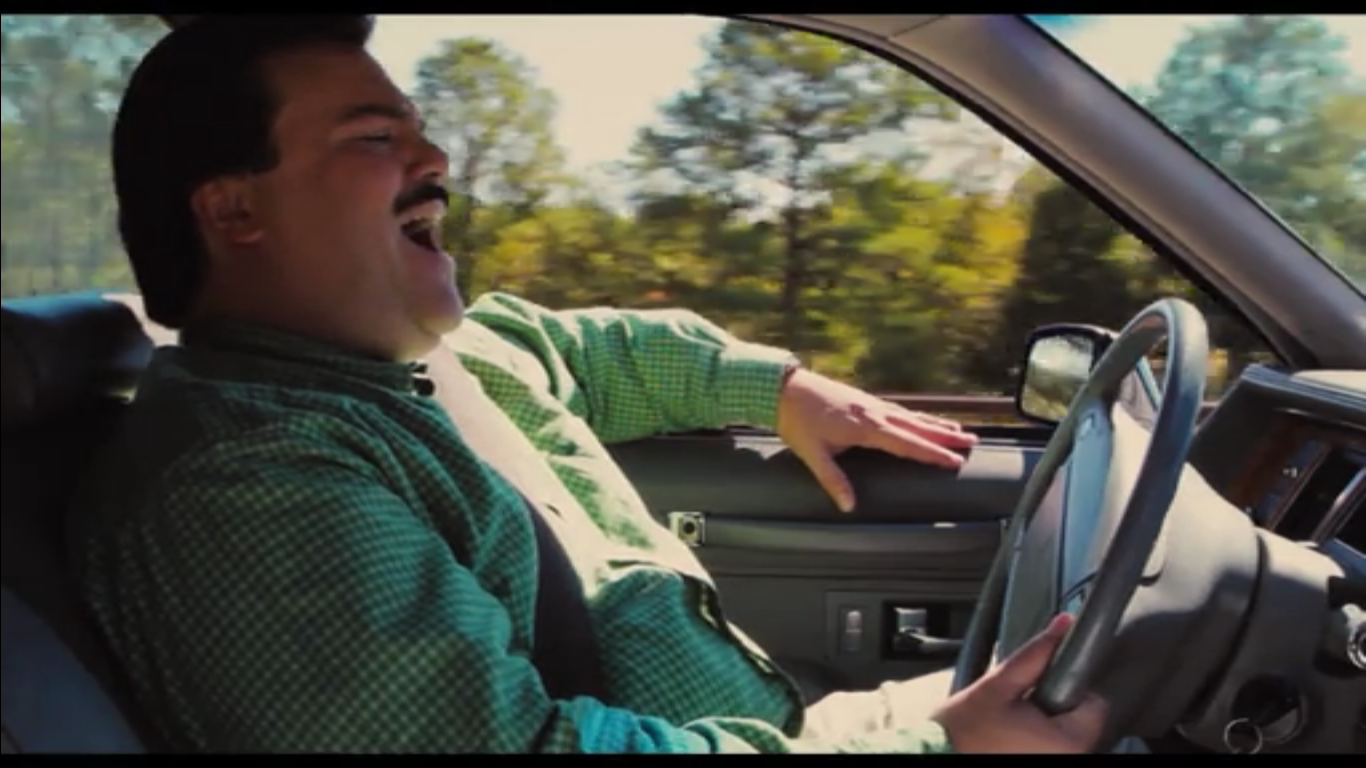
This is one performance that I was sure would get nominated and would win, though that was before I knew Daniel Day-Lewis would come along with his stovepipe hat and surprisingly effeminate voice to take it from him.  Still, that Black was not nominated is the most grievous oversight of the year.  He plays Bernie, a murderer who wins the hearts of an entire Texas town.  By the end of Bernie, we're willing to forgive him too.  Black creates a character so genuine that we accept him, and are even rooting for him.

Quvenshane Wallis, Beasts of the Southern Wild
Six-year-old Wallis is a rock solid foundation for the enthralling film, and our guide through a mesmerizing world that I must admit I've never seen before.  She's Hushpuppy, a young girl who lives in a borderline-indigenous community in Louisiana called the Bathtub, separated by hurricanes from the mainland.  Beasts is a wonderfully funny, sad, sometimes fantastical film told completely through Hushpuppy's eyes, and Wallis holds up the film superbly.

Jennifer Lawrence, Silver Linings Playbook
Lawrence takes what could have been your average magical pixie girl and gives her life.  The premise of the film threatens to make her Tiffany into a plot device, but Lawrence makes her into a real person and one of the most memorable screen characters of the year.  I was worried she'd relegate herself to being the Hunger Games girl for the rest of her career, but this film proves that she certainly will not.

Liam Neeson, The Grey
Though it may appear that way, The Grey is not another in the long line of Neeson-led brainless action films.  In addition to being a ruthless, terrifying thriller, it's a meditation on what men become when they're stripped of their humanity and forced to face the bare elements: after a plane crash, a group of workers at an Alaskan oil rig is forced to find a way to survive.  Neeson gives one of his best performances as a man who comes from the brink of suicide and transforms into a natural leader.  His most memorable moment, I think, is his heartbreaking speech to a dying man (Joe Anderson), which no other actor could have pulled off: it begins, "You're going to die.  It's okay."

Bradley Cooper, Silver Linings Playbook
Like screen partner Lawrence, Cooper gives a performance here, as an undiagnosed bipolar phys ed teacher with a violent streak, that ensures he'll not be shoehorned as the Hangover schlub.  Were it not for Day-Lewis, he'd be the sure winner.

Jared Gilman, Moonrise Kingdom
As young Sam, the romantic lead of Wes Anderson's charming adventure-fantasy, Gilman represents the kind of unblinking confidence combined with relative inexperience of adolescence.  This is my favorite Anderson film to date, and Gilman makes for a supremely likable hero.

Channing Tatum, 21 Jump Street
Now this was a surprise.  I wasn't expecting 21 Jump Street to be any good, much less the funniest film I'd see all year, which it turned out to be.  And I sure as hell wasn't expecting Tatum's to be the performance I'd be heralding, but it was.  Tatum, whose experience beforehand has been mainly in iron-jawed action films, slick battle-dance movies, and weepy love stories, is a surprisingly ept comic actor.  Playing the dumb jock to Jonah Hill's nerd, Tatum takes to the role of straight man quite well.  He's got a future.

Christoph Waltz, Django Unchained
Ever reliable, Waltz creates a character here in bounty hunter/dentist Dr. King Schultz that is the flipside of his vicious Hans Landa in Inglourious Basterds.  He's tenacious, cunning, and slightly foppish, though this time he's on the good side.

Denzel Washington, Flight
It's difficult to play a functioning alcoholic as anything but a caricature, but Washington carefully avoids parody in the role of Whip Whitaker, an airline pilot who bravely lands a doomed commercial plane with minimal casualties while under the heavy influence of alcohol and cocaine.  Robert Zemeckis's film wisely doesn't moralize--there's no question that Whip exhibits utmost professional behavior while drunk, and it's his expertise that saves dozens of people--but the film explores how the crash brings to light the lies he's been telling himself and others, and challenges him to become a better person.

Sam Rockwell, Seven Psychopaths
Martin McDonagh is among the best playwrights currently working, and his feature debut In Bruges is one of the best films in recent years.  Seven Psychopaths is a less cohesive piece of work, and its more introspective moments aren't as successful as the splatter comedy moments are, but Rockwell's performance is a standout.  His Billy is the cinematic equivalent of the mentally challenged brother Michal in McDonagh's "The Pillowman": he's the best friend of screenwriter Marty (Colin Farrell) and provides the inspiration for much of his work, but may be taking his job much too seriously.  Rockwell plays a man who is blissfully unaware of the destructive consequences of his actions, yet whose friendship is so genuine that Marty can't bear to let him go.

Performances of the Year (Supporting)

Samuel L. Jackson, Django Unchained
Jackson's performance as the house slave Stephen is the saddest in the film: he's a man who's despised on all sides and who has traded his dignity for the convenience of a slightly more comfortable life.  He essentially plays two characters: he's a minstrel-show actor in public, and a devious and intelligent snake in private.  This is Jackson's best performance to date and the best performance I've seen all year.

Michael Fassbender, Prometheus
I've made no secret of my dislike for Ridley Scott's fumble of an Alien prequel-slash-meditation on the creation of humanity, but the movie is worth seeing for Fassbender's performance alone.  He plays the android David, who in the years his human counterparts have been asleep on their space journey has learned much about humanity and about his own existence.  He provides a foil for the movie's great question: what if you meet your maker, and your maker hates you?  David knows the answer; his human partners are about to find out.

Dwight Henry, Beasts of the Southern Wild
As the father of the young Hushpuppy, Henry gives a bold performance that is every bit as good as Quvenshane Wallis's.  His Wink is a bombshell: hardheaded, stubborn, sometimes overly harsh on Hushpuppy, but his relationship with her is warm and believable, and is why the last moments of the film are so moving.

Robert De Niro, Silver Linings Playbook
De Niro perfectly embodies the kind of father that the aggressive Pat (Bradley Cooper) would have: an obsessive-compulsive bookmaker who needs to put everything in the universe in the right place so the Eagles can win.

Hannah Fierman, V/H/S
If you've seen the movie, then you remember her.  In the first and best segment of this first-person horror anthology, Fierman plays a strange, taciturn young woman who is picked up by a gaggle of drunken bros one night at a bar, and... well, you have to see it.  Fierman is a delightfully spooky presence even before her hand is dealt.

Mark Ruffalo, The Avengers
The first actor to successfully tackle the Hulk, Ruffalo plays the character wisely as a man who's putting himself through the most painful kind of anger management there is.  Ruffalo's Hulk is, as he professes, always angry, and there always appears to be something bubbling underneath the surface.

Alan Arkin, Argo
As "producer" Lester Siegel, Arkin is a perfect representation of the downright loony side of this plot: he channels Zero Mostel in The Producers as a down-and-out Roger Corman-like producer who's tasked with making a fake sci-fi movie for the CIA.

Bradley Whitford, The Cabin in the Woods
Whitford is perfectly cast alongside Richard Jenkins as a bureaucrat who essentially writes a horror movie for a real-life cast.

Jacki Weaver, Silver Linings Playbook
As Bradley Cooper's mom, Robert De Niro's wife and thus the most level-headed person in the household, Weaver perfectly plays a woman struggling lovingly to create a healthy environment for her very unstable family.


Matthew McConaughey, Bernie
In a movie where the hero is a coldblooded murderer, McConaughey plays the villain, a stiff-shirt D.A. who brags about the phony sweepstakes schemes he uses to catch deadbeat dads.  McConaughey is perfectly heartless and by-the-book, and though he's morally on the right side, he's despicable and sleazy while Bernie is genuine and sweet.

The Ten Best Pictures of the Year

10.  THE AVENGERS

A full-bodied actioner at its finest, and a rare ultra-high-budget, high-concept Hollywood movie that gets it exactly right.  Joss Whedon, who created Buffy the Vampire Slayer and appears on this top-ten list more than once, ties together this gargantuan franchise cleverly.  Considering that this is a combination of four Marvel franchises, and adds several key characters of its own, The Avengers is light on its feet, funny, well-acted by its all-star cast, and very entertaining.

9.  LOOPER

Rian Johnson is one of the smartest screenwriters working, and his Looper is an often brilliant piece of sci-fi.  Like the Back to the Future trilogy, it takes time travel at face value, accepts its paradoxes rather than challenge them, and creates a compelling story set on different planes of time.  Bruce Willis gives one of the most complex, heartfelt performances of his career as a former hit man sent back in time to be killed by his past self (Joseph Gordon-Levitt, amazingly Bruce Willis-like).  Jeff Daniels is terrifically odd as a mob boss from the future who runs operations in the past, and the unjustly overlooked Paul Dano is excellent as a particularly vulnerable hit man.

8.  LES MISERABLES

A great film version of a pretty good musical.

7.  21 JUMP STREET

This would appear to be a strange vehicle for Jonah Hill, who plays a lead role and co-wrote the script alongside Michael Bacall.  Not only is it a 21st-century update of a late-'80s crime drama that I’ve never watched, but it’s a self-referential, ironic and hip comedy version. The idea of updating once-serious TV shows as modern comedies is pretty much a fluke, having peaked with the fun Stiller-and-Wilson Starsky & Hutch, and hit its low with the lame Nicole Kidman/Will Ferrell Bewitched debacle.  But because it's cleverly written and directed by skilled comic minds (animators Phil Lord and Christopher Miller), it works.  Hill and Channing Tatum are likable as the two leads, and much of the movie works because we care about their characters and their relationship.

6.  MOONRISE KINGDOM

Wes Anderson's career has not been spotless, but he is adept at portraying the adolescent mind, as well as the mind that is trapped in adolescence.  This movie, a storybook fantasy about a young boy (Jared Gilman) and girl (Kara Hayward) who run away from home together, is the sort of thing Anderson does best.  Frances McDormand, Bill Murray, and Bruce Willis appear as adult characters who have adolescent tendencies themselves.

5.  BEASTS OF THE SOUTHERN WILD

A truly one-of-a-kind film.

4.  THE GREY

The Grey is an unrelenting thriller in which its all-male cast is put to the ultimate test.  After a plane crash leaves them stranded in the middle of the Alaskan tundra, with no help coming their way, a group of oil rig workers have to brave the elements to make their way to safety, and must escape a pack of hungry wolves who are defending their territory.  After his jokey Smokin' Aces and The A-Team, director Joe Carnahan delivers a brutal, honest, nervewracking film that grabs you and doesn't let go until long after the final shot.

3.  BERNIE

Jack Black plays Bernie Tiede, an unassuming young assistant funeral director who's never told a lie in his life, short of maybe upselling some customers on a coffin.  He sees the good in everybody in the small Texas town he moves into.  He even sees the good in old Marjorie Nugent, the mean, nasty widow of a well-liked banker.  He befriends her, moves into her house, and then one day he shoots her in the back four times and kills her.
The genius of Richard Linklater's Bernie is that it does not excuse Bernie's crime or justify it, but convinces us that Bernie is a good soul all the same.  Though he's done a bad thing, he is still a genuinely good person, and his good deeds continue long after the murder.  Black creates a character so darned likable and pure that we understand his actions and we like him anyway.  That Bernie received no Oscar nominations is a downright shame.

2.  THE CABIN IN THE WOODS

It's rare that my best film of the year is ever a horror movie, since there are rarely any great ones nowadays.  It's even more rare that my two best films of the year are both horror movies.
Although I don't quite know if I can call The Cabin in the Woods a horror movie.  It's more of a movie about horror movies.  What I can say is that from beginning to end, it's hilarious, exhilarating, and, yes, sometimes pretty scary.  Every scene is dastardly clever, right from the unexpected cut after the opening credits to the abrupt conclusion.  The setup--a bunch of kids go to stay at a scary cabin in the woods--is right out of Evil Dead, and the sub-plot in which the bureaucrats down below (Richard Jenkins and Bradley Whitford) run the whole operation is a perfectly askew way to view the idea of a horror movie.  Vague references are made to higher-ups as well as a "director." Who are they working for?
Well, they're working for us.  We are the people who are demanding that these kids be stabbed, shot, flayed, crushed, blown up, whatever, for our amusement.  The Cabin in the Woods, directed by Drew Goddard from a screenplay he wrote with Joss Whedon, is a brilliant satire of the making of a horror movie, and it points at the silliness of the outright barbarism that is portrayed for our enjoyment.
If you haven't seen the film, I haven't spoiled it.  The last half-hour of the film... well, let's just say that there was a point at which I wondered, "Will they?" And they did.  The Cabin in the Woods is a gleeful mishmash of everything that we horror fans hold dear into one gigantic melange of bloody, oozy insanity.
Which brings me to...

1.  SINISTER

Sinister is the flipside of The Cabin in the Woods.  Both are essentially satires of horror conventions, but while Cabin looks at them from a right angle, Sinister takes them seriously.  Director Scott Derrickson walks a fine line in making a horror movie that essentially wags its finger at horror films, but he pulls it off.
Sinister is an indictment of the kind of "torture porn" that is prevalent in mainstream horror nowadays.  The inclusion of several snuff films throughout the movie is risky, but Sinister never seeks to inspire the kind of sick joy that many horror films do in the mangling of human beings.  It keeps a straight face throughout, creates characters we can identify and sympathize with, and gives them the same half-disgusted, half-intrigued approach to the horror that we are given.
Sinister is chilling, and features the best boogeyman character I've ever seen in films.  Its score, by Christopher Young, is also among the best that has ever accompanied a horror film.  There is no memorable theme that stands out, but Young creates ambient sound that is perfectly incorporated into every scene.

Honorable Mentions

Django Unchained: I had issues with this film upon first viewing, and I still do.  It's the only Tarantino film to date to have serious issues with tonal shifts: it goes back and forth from goofy jokes to whips and chains without much transition.  But Tarantino also breaks new ground by tackling a serious subject for the first time.  And I take back my final criticism of the film, in which I pondered what it might have been like if Sam Jackson's Stephen redeemed himself in the end.  The movie couldn't have ended that way, because there was no redemption in slavery.  All the torture in the film is left purposely hanging there.  The guy gets his girl in the end, and that is as happy an ending as we will get.

Dredd: This little action movie went mostly overlooked, at least in the U.S.  Remaining faithful to the comic book character on which it's based, as opposed to the Sylvester Stallone-headlining monstrosity Judge Dredd of 1995, Dredd is an exciting action flick that inhabits a post-apocalyptic universe where the fascist is the hero, and the movie is unapologetic about it.  Karl Urban reportedly took the role on the condition that Dredd would never remove his mask, and he never does.

The Five Worst Pictures of the Year

5.  THE POSSESSION

Though well-acted, this Jewish Exorcist knockoff just doesn't cut it.  It starts well, with a great opening, a great possessed child (Natasha Calis), and a hell of a scary box at the center of the story, but by the time Matisyahu shows up as a rabbi exorcist, it's gone off the rails.

4.  TIM AND ERIC'S BILLION DOLLAR MOVIE

I appreciate that Tim Heidecker and Eric Wareheim made the movie they wanted to make, the movie that made them laugh.  It didn't particularly make me laugh, but good for them anyway.

3.  THE RAVEN

John Cusack is a great Edgar Allan Poe, but quoth the raven, "This movie sucks."

2.  HOUSE AT THE END OF THE STREET

Sheesh.  This year's sure Oscar winner for Best Actress, whose name I hesitate to mention alongside this film, remains untainted since this movie was in the can before Winter's Bone came out.  Elisabeth Shue and Gil Bellows, however, have no excuse.

1.  THE WICKER TREE

This was a real disappointment.  I'd been awaiting Robin Hardy's sequel to The Wicker Man ever since Neil LaBute mucked it up with his horrible remake in 2006.  Sad to say, this sequel is just as much a retread of the original, and even worse.

More Honors

Best Film to Star Matt Damon or Ben Affleck: Argo.

The Christopher Walken Stolen Scene of the Year: He has little attention-stealing moments all throughout Seven Psychopaths, but I think my favorite was when he commands a character to keep quiet “in the name of our Lord Jesus.”

Movie I Should Have Been Nicer To: I have memories of funny moments in The Dictator that are fonder than the time I remember myself having while watching it. It might be time to give it another shot.

Movie I Should Have Been Meaner To: Breaking Dawn Part 2. I suppose I was happy enough to see a well-directed, fairly entertaining Twilight movie that I overlooked the outright creepiness of its assumption that women aren’t truly free until they’re married with children. And the pairing up of Jacob with the little girl is unconscionable no matter how you look at it.

Best Movie Review Overheard in the Theater: “BOOOOOO!!!!!” as the closing credits rolled for Prometheus.

The Natalie-Portman-in-Garden-State Award for Coolest Chick Who Doesn’t Exist Anywhere But the Movies: I may be cheating, because she does exist somewhere other than the movies, but this belongs to Eponine (Samantha Barks) in Les Misérables. She’s in love with Marius, he falls in love with someone else right in front of her, and she gives her life for him anyway. Whatta gal.

Best Cameo: Hands down, it’s Sam J. Jones in Ted.

Worst Cameo: Will Forte’s appearance in Tim and Eric’s Billion Dollar Movie brought nothing to it and used none of the actor’s natural comic skill.

Best Remake: The Farrellys’ The Three Stooges brought the trio to the screen again pretty accurately.

Induction into the Grindhouse Hall of Fame: V/H/S.

Biggest Bore: House at the End of the Street.

Best Closing Image: The final shock at the end of Sinister is a doozy.

Unlikeliest Romance: The implication at the end of Breaking Dawn Part 2 is that werewolf Jacob and little Renesmee will hook up once she’s, you know, of hooking up age. Ick.

That about takes care of it!  Enjoy the Oscars.

Tuesday, January 29, 2013

Best Picture #5: ZERO DARK THIRTY (2012)


I’ve been grappling with Zero Dark Thirty for about a week now, trying to figure out just what about it doesn’t seem right. That it is a very good thriller I am sure, but its status as a good film remains questionable.

Like many films that deal with the general topic of terrorism surrounding 9/11 and Al Qaida, Zero Dark Thirty is not about what many people seem to want it to be about.  It's not a screed on torture and its effectiveness, though its early scenes do portray the use of "enhanced interrogation techniques" brutally and unflinchingly.  It's not a criticism of the CIA's inability to catch Osama bin Laden for twelve years, although its lead character does face frustrating roadblocks from her superiors when it comes to following her leads.  And it's not a rah-rah flag-waving celebration of Seal Team Six's brave effort in going into the Abbottabad compound late one night, although the final act does depict their raid in detail.

Rather, Zero Dark Thirty is a play-by-play portrayal of the hunt for bin Laden, a walk-through of every step in the logical puzzle, from a detained low-level Al Qaida operative all the way up to bin Laden himself.

And that’s the film’s major problem. True, it doesn’t purport to be anything other than a straightforward account of what is essentially the party line story of the bin Laden hunt. I’m the first to decry critics who try to shape a movie to their own preconceived notions, but Zero Dark Thirty is maddeningly nonpartisan when it comes to dealing with issues that are immediately politically charged as soon as they’re shown. It wouldn’t have killed the movie to have a point of view.

The movie’s shortfall may be due to the recency of the events it portrays. Director Kathryn Bigelow and writer Mark Boal were developing a movie about the hunt for bin Laden long before he was found and killed; therefore the movie was pretty much reshaped from the bottom up after May 2011, and had to be rewritten on its feet as facts became clear. There was no time for history to judge the events, no time to reflect or ruminate, no time to theorize or analyze or examine the causes or ramifications of America’s quest to find its most wanted killer. Only time to report. And that’s all that Zero Dark Thirty does, albeit very well.

The movie opens with jarring audio footage of the 9/11 attacks, which sets the singular purpose of the characters in the film in motion: get bin Laden. We then go to Afghanistan, where CIA operative "Dan" (Jason Clarke) is interrogating a low-level al Qaida operative (Reda Kateb). At his side is the agent we know only as "Maya" (Jessica Chastain), who will be the movie’s crusader to pin bin Laden down, through every obstacle put in her way.

The torture in the film’s first sequence, including a graphic waterboarding, is depicted plainly, with unflinching brutality. What’s more horrific is that Dan and Maya succeed, and convince the prisoner to give them the information they need. This is the most thought-provoking sequence in the movie, as it reframes the torture debate as not a tactical question but a moral one. The debate has casually morphed into a question of “Does it work?” instead of “Is it right?” In order to convince those who have trouble sympathizing with “enemy combatants,” we’re told not that torture is a crime against humanity, but that it is messy and ineffective. The torture in this film is not messy; rather, it’s meticulously planned and carefully dispensed for maximum effect. A jarring revelation is that Dan  is not a thug, but a psychologist. This is not a barbaric method instituted crudely, but a pointed and organized tactic using horrifically cruel means.

Beyond that, the movie takes no particular position on the torture. It's left up in the air whether or not the necessary information could have been gathered by other means (one plot detail at the halfway mark seems to suggest that it could have). The movie merely acknowledges that enhanced interrogation took place, and that its perpetrators were willing to commit such acts in order to achieve their singular goal of finding bin Laden.

Zero Dark Thirty is at its best when it shows us the inner workings of the hunt: the varying tactics, the obstacles, the dead ends. The movie's details are captivating. A sequence involving the tracking of a man who appears to be bin Laden's courier is gripping.

The actors are all adept at bringing subtle humanity to characters who are tasked with leaving their emotions behind. Chastain's role is not particularly difficult, and far short of the complex and fascinating work she brought to The Help and The Tree of Life. Still, she invests the steadfast Maya with a certain frailty that enhances her dedication: the bin Laden hunt is all she's ever done in her professional career, and all she knows how to concern herself with. (This subtext is made whoppingly clear in the movie's clumsy final shot, which is completely unnecessary and condescending.)

Kyle Chandler is equally good as Maya's boss, who seems to be a bureaucrat but is just as dedicated as she is.  Mark Strong is memorable as another CIA high-up.  Clarke hits the right note as his paradoxical character, who is a brutal torturer one minute, but revealed to be a regular guy. His memorable line upon quitting his job, "I've seen one too many guys naked," has been debated by liberals as evidence of the movie's cavalier attitude toward torture, but is actually a revealing glimpse into the male torturer's fear of femininity and resistance to his own qualms about what he's doing.

The least captivating part of the film is the raid itself, when the Navy Seals (including Joel Edgerton and "Parks and Recreation's" Chris Pratt) burst into the Abbottabad compound and take out bin Laden, which is much less interesting than the puzzle that got them there in the first place.  We know that Bigelow and Boal had planned not to have to include this scene at all, but since no one will accept a bin Laden movie without it (like Lincoln without the theater scene), it's been tacked on.  The raid sequence suffers from the general documentary limits of the rest of the film: it's very well shot, well acted and believable, but has little of substance to say about what happened on that night.  Even the danger the Seals are thrown into is understated; there's very little suspense.

Zero Dark Thirty is foremost a thriller, interested more in depicting a suspenseful story than in making a statement.  The argument could be made that it doesn't need to take sides, but with its depiction of such politically polarizing issues as torture, not to mention the general risky moral ground the CIA finds itself on these days, it would be nice if it had something to say about it all.  Zero Dark Thirty is interested in the mechanics of the operation without giving much thought to the big picture.  I can still recommend it as a good suspense film, but that's about it.

*** out of ****

Wednesday, January 23, 2013

Best Picture #4: ARGO (2012)


Ben Affleck cements his transformation from unfortunate tabloid feature to A-list director with Argo, which is not only a masterpiece of suspense filmmaking but one of the most entertaining and absurdly funny films of the year. It tells a story that could only be true, and ironically feels a little bit less realistic than Affleck’s two previous features, Gone Baby Gone and The Town.

A brief animated introduction gives us the Cliff’s Notes version of the historical background for the Iranian hostage crisis. We begin at the American embassy in Tehran just as revolutionaries, driven to action by the U.S.’s propping up of a dictator who served their oil interests, storm the front gates and take over. In a gripping suspense sequence that sets the tone for the rest of the film, six Americans escape and hide themselves at the Canadian embassy.

The U.S. government catches word and tasks the CIA with getting the six trapped Americans out. Bereft of sensible ideas, agent Tony Mendez (Affleck) comes up with the only crazy thing that might work: invent a fake Hollywood sci-fi movie, pose the Americans as a Canadian film crew, send them to scout desert locations, and fly them out safely.

This proves to be their “best bad idea,” as labeled by Mendez's supervisor (Bryan Cranston), but it proves just absurd enough to work. Hollywood has always reached across enemy lines; even fascist dictators such as Kim Jong-il have professed their love for the movies. The six escaped hostages (Tate Donovan, Clea Duvall, Scoot McNairy, Rory Cochrane, Christopher Denham, Kerry Bishe) are essentially making a movie themselves: each has to play the part of a crew member on the made-up film, which proves to be tough work, especially under fire and on a deadline.

The making of the fake movie is fascinating. Mendez collaborates with makeup artist John Chambers (John Goodman), who was revealed to be a frequent CIA collaborator, and B-movie producer Lester Siegel (Alan Arkin), to give authenticity to the film. They even set up a staged reading of the script (Mendez and crew settle on a Star Wars knockoff called Argo) with costumes that rival David Lynch's Dune. Arkin is particularly memorable as a Roger Corman-like producer who’s neither rich nor famous but is a veritable king of trash cinema; imagine if Broadway Danny Rose were born on the opposite coast.

With precision, Mendez orchestrates the Americans’ way out of Iran, in a plan in which the slightest deviation could mean their end. A scout through the streets of Tehran, in which Iranian officials request to meet the “Canadian” crew, is brutally tense. Affleck keeps the film going at a rapid pace, and shows us each step of their tenuous escape as it progresses toward each terrifying obstacle.

Only toward the climax do Affleck and his screenwriter, Chris Terrio, step wrong and make the movie, well, too Hollywood. It is not such a problem that they take liberties with the true events for dramatic purposes. In the end, the sum of the story appears to be true, even if some of the parts are exaggerated. Affleck is also sure to avoid the U-571 problem of labeling the rescue a solely “American” effort; he gives due credit to the Canadians for making the rescue possible, providing passports, and putting their own embassy at risk to do so.

For what it's worth, Affleck's character reportedly is not quite as singlehandedly responsible for orchestrating the effort as the movie suggests, and there was at least one Canadian official unmentioned in the film who appeared to put more on the line than Mendez.  Ken Taylor, the ambassador played by Victor Garber in the film, claims that his fellow Canadians could have made the extraction without the Americans getting involved at all.  This muddying of facts would matter more if Argo were a rah-rah trumpet of American exceptionalism, but Affleck's tone is not the slightest bit jingoistic.  It does not present itself as a film about Americans coming to the rescue of some helpless foreigners; I think the movie, being a movie, needed a hero, and Mendez was the one they settled on.

The climactic escape—I hope it’s not a spoiler to reveal the historical truth, that the six Americans did in fact make it out alive—is unfortunately trumped up a little bit too much. The natural tension of the events would have been enough to hold our interest, but the movie introduces too many plot points that seem artificial. We could have done without the phony end-of-act-two shutdown of the operation that’s meant to deify Mendez once he disobeys orders and continues it anyway. Since we know it’s going to happen anyway, it’s a plot turn with no purpose. There's also a needless complication in which the Arkin character is kept from answering a key phone call by a movie shoot in the streets.

Though its status as a docudrama is questionable because of some obviously contrived scenarios and a Hollywoodized lead character, Argo is still a great thriller.  It begins with a seemingly unworkable premise, then walks us through it in an elaborate and compelling way.  For all the tests it fails, it passes this one: it thrills.

*** 1/2 out of ****

Best Picture #3: LES MISERABLES
Best Picture #2: SILVER LININGS PLAYBOOK
Best Picture #1: DJANGO UNCHAINED

Best Picture #3: LES MISERABLES (2012)


No matter what anyone has to say about Django Unchained, Les Miserables is sure to be the most polarizing movie of the Oscar season.  For the most part, movie musicals have a niche audience nowadays: there are those who will accept a movie in which the characters sing and dance their way through the plot, and those who won't.  Fans of Victor Hugo's novel may not be terribly pleased with the boiling down of his epic to its essentials (Roger Ebert was not a fan).  Like Joel Schumacher's surprisingly decent-for-what-it-is movie version of The Phantom of the Opera, Les Miserables will probably not interest those who aren't familiar with or fond of the stage musical.  But those who appreciate it will find the musical beautifully transferred to the screen, with a splendid production and an excellent cast.

In early 19th-century France, prisoner Jean Valjean (Hugh Jackman) is released from prison after serving a 19-year sentence for stealing a loaf of bread.  After a kind priest does him a good deed, he assumes a new identity as mayor of a small town and pledges to live a good honest life.  When he overlooks the poor treatment of a seamstress (Anne Hathaway) who works for him, he pledges to devote the rest of his life to caring for her daughter, Cosette.  However, he must be careful to avoid the pursuit of police captain Javert (Russell Crowe), who is after him for breaking parole and is the only man who recognizes him for who he used to be.

Much of the second half of the film takes place against the backdrop of the June Rebellion of 1832, in which Paris Republicans fought royalist soldiers in the streets.  Valjean finds himself in the center of the revolution, fighting at the side of young Marius (Eddie Redmayne), who has fallen head over heels in love with the now-grown Cosette (Amanda Seyfried).

Though the movie gives only a Cliff's Notes version of the historical event at its center, its place in the story is clear.  The musical's theme is of how selflessness can lend meaning to a life; Valjean's life means nothing until he dedicates it to caring for Cosette, and Marius and his soldiers are given purpose with their dedication to the rebellion.  Javert, by contrast, is a man of no compassion and only laws, and his frustration that any criminal could grow to be so kind leads to his downfall.

The major difference between the stage musical and the movie, sure to be debated among fans, is the quality of singing voices.  The stage musical is usually populated by singers who act; the necessary change that director Tom Hooper has made is to cast actors who sing instead.  The actors for the most part do not have Broadway-quality voices.  The exceptions are Jackman, who's a veteran of many musicals, and Samantha Barks, who plays Marius's friend Eponine and delivers a heartbreaking rendition of "On My Own" (and thankfully beat out Taylor Swift for the part).

All the other actors sing like actors, which is perfectly fine.  A movie requires a more intimate vocal interpretation than a stage show does, and the cast all deliver fine vocal performances.  Crowe in particular has taken a lot of flack for his lackluster singing voice; actually, he's very good, and his limitations as a singer don't count against his embodiment of the driven, staunch Javert.  The only players who disappoint are Sacha Baron Cohen and Helena Bonham Carter, who as the "Master of the House" and his wife are not particularly bad, but fail to bring energy to a couple of fairly lamely written comic relief parts.

Hooper's direction of the material is a balance between the epic and the intimate.  The production is grand, the scenery lush, the music gorgeous and sweeping.  But Hooper doesn't take a larger-than-life approach to his characters; he prefers long takes with limited focus (most of the numbers were recorded live on set).  For the key number "I Dreamed a Dream," delivered beautifully by Ms. Hathaway, Hooper never once pulls the camera away from her face as we witness her destruction before our very eyes.

Though it will certainly have its detractors, Les Mis is quite good.  At a time when it couldn't have been easy to make a big-budgeted production of a lavish musical, Tom Hooper has gotten it done.

*** 1/2 out of ****

Tuesday, January 22, 2013

Best Picture #2: SILVER LININGS PLAYBOOK (2012)


It's a risky move to try to make a Hollywood romantic comedy about mental illness, but that is what David O. Russell has done with Silver Linings Playbook.  Movies like this always run the risk of being either too contrived or too maudlin, especially when dealing with something as complex and personal as bipolar disorder.  Russell and his cast have masterfully avoided this pitfall.  Like CrazyStupidLove, it tells a story that's as contrived as any romantic comedy has ever been, but it's better because it takes its subject matter seriously.  And its cast is nothing less than superb.

Pat (Bradley Cooper) is released from a mental institution to the custody of his parents (Jacki Weaver and Robert De Niro).  Relentlessly positive, he hopes to get himself into good mental health right away so he can repair his relationship with his wife Nikki (Brea Bee), who currently has a restraining order against him.  He's an all-too-common case who thinks he has everything figured out, although everyone around him knows he still needs help.  Trouble is, his environment may not be the most conducive to his mental health.  Dad is an obsessive-compulsive bookie and often blames Pat when his football team loses.  Mom is a trooper who's doing her best to keep everything in order, but her control is constantly tested.

Then he meets Tiffany (Jennifer Lawrence), the younger sister of a friend.  Tiffany has also struggled with depression, and has recently lost her husband.  She inserts herself into his life, sometimes by force.  Pat resists, but when Tiffany offers to relay messages to Nikki for him, so long as he agrees to help her in several ways.  This gives him the drive to make himself better, but he soon begins to discover what's really important to him.

We can foresee the movie's conclusion right from the start, and it's to the actors' and director's credit that it doesn't seem forced.  Russell, who is not one to succumb to the Hollywood formula, lends authenticity to the screenplay, even when the plot takes it to some fairly familiar places (key set pieces take place at a football game and, climactically, a dance contest).

Cooper hits just the right note as a likable character with a violent past who we'd like to see get better.  De Niro is perfect as a goodhearted father who just doesn't realize when he's being a bad influence.  As the penitent mom and wife, Weaver exudes maternal nobility.  Chris Tucker is hilarious as a former roommate of Pat's who often turns up unexpected.  Anupam Kher is particularly memorable as Pat's psychiatrist, the kind of person who is a staunch and reliable authority but isn't above painting his face for a football game.

Lawrence steals the show.  The character of Tiffany is risky territory, as characters of this type usually end up as magical pixie girls who exist for no reason other than to rescue the hero.  Thanks to Lawrence's performance, Tiffany is a flesh-and-blood character who is understandably offended and repulsed with Pat at first, but grows to understand and love him.  Because Lawrence and Cooper are believable, we follow them into everything the overwritten plot throws at them.  Still only 22, this is Lawrence's second nomination for Best Actress, and it is the second time she deserves to win.

*** 1/2 out of ****

Best Picture #1: DJANGO UNCHAINED (2012)


A rollercoaster of thoughts went through my head while watching Quentin Tarantino's troubling, occasionally brilliant Django Unchained.  His film has not come without its share of controversy, given that it's essentially a comic book movie about slavery directed by a white man.  Many have questioned Tarantino's right to make such a film, and one prominent filmmaker has labeled it disrespectful while refusing to see it.

I think the problem is that we all have expectations for what a Tarantino film will be.  He has dealt mostly in pulp, and most of his films have been near-satirical explorations of genre rather than life.  He makes movies that inhabit a movie universe.  Even his World War II film, the wonderful Inglourious Basterds, was set squarely in the world of the movies.  While the specter of the Holocaust certainly haunted Basterds to an extent, Django is his first film to deal up front with a real-life atrocity.

And so the tone of Django is subtly different from that of his earlier films.  We've grown to expect a Tarantino comedy, but that is not what Django is, though there are several laugh-out-loud moments.  The laughter stops after a while, as it should.  The movie's outright brutality is shocking, because we aren't afforded the usual distance from violence that we expect.  Because we start with Tarantino's cheeky dialogue and are then thrown into a world of horrific violence, Django is often an enraging film.  It takes a while before we notice that Tarantino is actually making a serious movie.

Not a serious film, mind you, but a serious movie.  Django is a comic book movie after all, one with clear-cut heroes and villains, and exaggerated situations with stylized violence.  It also doesn't have much of anything to say about slavery itself, other than that it was a very bad thing that is not far enough in our past.  But Tarantino takes the subject matter seriously, doesn't trivialize slavery, and creates an elaborate and horrific universe around the pre-Civil War South.

What Tarantino hasn't changed is his knack for quirky, odd, memorable characters.  He has created a couple of terrific heroes in his two lead characters, as well as a fine performance from Jamie Foxx and yet another unique character from Christoph Waltz.  This time Waltz is on the heroes' side, playing Dr. King Schultz, a onetime dentist who now works as a bounty hunter.  He raids a couple of slavers in search of one slave, Django (Foxx), who can lead him to the men he's seeking.  Soon the two men decide to become partners in bounty hunting, and Dr. Schultz promises to help Django find and free his long-lost wife, Broomhilda (Kerry Washington).

Broomhilda is currently owned by Calvin Candie (Leonardo DiCaprio), a plantation owner in Mississippi who takes a special interest in Mandingo fighting, in which a couple of strong black men fight to the death for his own entertainment.  Django and Schultz hope to free her by posing as slavers and proposing purchasing one of Candie's fighters.

It's here that Tarantino abandons the usual overplayed silliness and stakes darker territory.  His scenes at Candie's plantation ("Candie-land") contain some of the most brutal and uncompromising violence I've ever seen.  But though Tarantino borrows his style from exploitation films, his movie is not exploitative but honest.  What they witness at Candie-land brings Dr. Schultz to think beyond his personal quest, and to make a decision that leads the film to its technically positive but very sad conclusion.

DiCaprio, as the film's Mississippi equivalent of Waltz's Hans Landa in Inglourious Basterds, finds in Candie a perfectly insidious creature: wicked, amoral, buffoonish, frightening.  Washington fails to make much of an impression as Broomhilda; though she's acceptable as a goal for Django, her role is underwritten and it feels like many of her scenes were left on the cutting room floor.

The most heart-wrenching performance comes from Samuel L. Jackson as Stephen, Candie's loyal house-servant.  Stephen is the most genuine character to ever exist in a Tarantino film: a driven, intelligent, devious man who's done what was necessary to survive.  His status as a house slave grants him certain privileges with his owner--he is allowed to speak out of turn and is treated at the very least as a conversational equal by Candie--but he is feared, reviled, and pitied by his fellow slaves.  He is the picture of a man who is disrespected by everyone, who has traded his dignity for security.  Stephen's is in many ways the saddest story in Django Unchained, and this is Jackson's best performance to date.

There has been much talk of Tarantino's liberal use of a certain word that he admittedly shouldn't be allowed to use.  In the making of a movie about slavery, for a white filmmaker to use the N-word is risky; however, for him not to use it is unconscionable.  To make a film in which slaveowners used nothing but nice words is a step closer to (forgive the term) whitewashing history.

Tarantino's main risk in using the N-word, I suppose, is that he is so good at writing memorable dialogue that he might unwittingly reintroduce it into the vernacular.  This risk is exacerbated by the fact that he is white; if one white director can use it, maybe we can all use it.  But Tarantino does everything he can to mitigate this risk; the N-word, uttered more than 100 times throughout the film, is ugly and clunky every time it's said.  He doesn't spin beautiful, quotable dialogue around it; rather, he cements it as the graceless term it is.  Come to think of it, I can't really think of a quotable line from the film at all, aside from Django's silly, forced "The D is silent."

Strongly written and cleverly acted as it is, Django Unchained is the first Tarantino film which struggles severely with tonal shifts.  The film begins comically, and at times Tarantino appears to be channeling Mel Brooks; a set piece involving Don Johnson as a doofus plantation owner and Jonah Hill as an even dimmer Klansman is hilarious.  Then the film starts to explore its more brutal side, which is jarring at first but increasingly genuine and believable.

But then it tries to have it both ways again, and concludes with a couple of spaghetti western-style shootouts, and an overblown Inglourious Basterds finale, in which the revenge fantasy is completed.  This is less compelling after what we've just witnessed; though the hero gets the girl, we're still left with the overwhelming violence and pervasive sadness of the earlier scenes, which just sort of hangs there unresolved.  Tarantino deals openly and honestly with the infection that was slavery, but he leaves it at that, and brings retribution in the form of grisly gunshots rather than a real resolution.  I suppose there was no way the movie could have ended with Stephen redeeming himself and becoming the hero.  I suppose.

*** out of ****

Tuesday, February 21, 2012

Best Picture #3: THE ARTIST (2011)


Michel Hazanavicius's The Artist is now in the running to be the first silent film to win Best Picture since, well, since the silent era.  This is both promising and a bit disheartening.  Promising, because it reopens the silent film as a marketable form.  It recognizes the silent film not as a dated artistic restriction, but as a viable artistic choice.  Silence calls our attention to the screen in a different way.  It also requires a different kind of acting, depending more on the director than the actor, on facial expression and montage where there would otherwise be dialogue.  Actors like Charlie Chaplin and Buster Keaton, neither of whom really made the leap into sound films, would be proud to see the silent film still alive.

Disheartening because The Artist, clever and authentic, brightly entertaining that it is, isn't about much other than itself.  If its style is not dated, its story is.  Its story of a silent film star (Jean Dujardin) who has trouble breaking into talkies has been done before: it's Singin' in the Rain, without the music.  True, it's skillfully made in a daring way that few films are brave enough to tackle, but it might be better to see the Best Picture award go to something more meaningful and less fanciful.  A week after seeing it, people may still be talking about the cultural significance of The Help, or George Clooney's deeply felt performance in The Descendants.  But mainly what they'll remember about The Artist isn't the characters or the story, but the gimmick.

Still, what a film it is.  It's an old-fashioned entertainment in a retro style, and as such it's marvelous.  George Valentin (Dujardin) is an action superstar, in the vein of Douglas Fairbanks or Errol Flynn.  His films all have to do with swashbuckling and romance, and he's usually wearing a black mask.  He's a celebrity with a fairly gargantuan ego, as we see in his early appearance at a premiere, much to the frustration of his leading lady (Missi Pyle, radiant as usual).

Then the talkies hit.  Valentin rebels against the system, attempting to keep the silent film alive, but he fails.  Riding the wave of sound is a plucky new star, Peppy Miller (Berenice Bujo), who's the talk of the new Hollywood.  But she's still a fan of the old Valentin, and savors a moment of flirtation that the two of them had while she was an extra in one of his films.  As he struggles with the end of his career, she grows more and more popular, but retains her fascination with him.

Dujardin and Bujo are perfect for their roles.  Dujardin makes for a dashing, ruggedly handsome alpha male, whose obstinacy at his downfall is tragically believable.  James Cromwell fits perfectly into type as Valentin's loyal-to-a-fault limo driver, as does John Goodman as the studio head.

Writer-director Hazanavicius has crafted a film that might, historical references aside, very well have been made as a legitimate silent film of the era.  It's also heartwarming and funny, with starmaking performances from Dujardin and Bujo.  My hope is that it will inspire a new wave of silent films to come, and soon we will have a new silent film in contemporary setting, which doesn't have to be about being a silent film.

*** 1/2 out of ****

Best Picture #2: The Tree of Life
Best Picture #1: The Help

Tuesday, February 14, 2012

Best Picture #2: THE TREE OF LIFE (2011)


Some directors tell stories; others compose symphonies. Terrence Malick’s The Tree of Life is a symphony of images, connected not by the logic of plot but by the strands of memory and thought. It is not the story of a boy growing up, but the story of a man contemplating his own growth, as well as his relationship with his parents, and even the origin of life itself. Our own personal experiences are often the jumping-off point for contemplating the big questions: what is life? Where does it begin and end? What does it mean to be a father? To be a man?

The parents in question are played by Brad Pitt and Jessica Chastain. Their characters are not so much unique and specific as they are universal. They represent paternity and maternity, respectively. Pitt is the eternal father: stoic, strict, and firm, but loving, and a strong leader of his family by example. Chastain is the mother: supportive of the father but more compassionate and more likely to take the children’s side. The press material lists the family’s name as O’Brien, but I don’t recall anyone ever saying anyone’s name in the film. The father is the Father, the mother is the Mother, and the son is the Son.

Like a symphony, the film is composed of movements. The first movement, sure to be debated at length, chronicles the beginning of the universe and the origin of life on earth. We see the Big Bang, the emergence of unicellular organisms, their multiplication, their evolution, the beginning of sea life, early animals first crawling out onto land, and dinosaurs. And finally, we see an asteroid hurtle toward the planet and wipe it all out.

It may be difficult to see the significance of this segment, considering that the remainder of the film contains no reference to it. Like many prologues, it is there to provide a contrast to the rest of the film. Everything in this first movement flows so simply and easily, guided by randomness. I think the key to this chapter is located in a sequence in which a dinosaur, wandering in a valley, steps on another dinosaur’s head until it is dead. This is not a brutal scene, but merely one of nature. Even the dinosaur getting stomped on doesn’t seem to care.

Once the asteroid hits, the slate is cleaned and there is no more simplicity. The randomness of the early scenes gives way to the complexity of humankind. An early voice-over from the Mother speaks of the difference between nature and grace; where the scenes of prehistoric life represent mere nature, the family represents the pursuit of grace.

The bulk of the rest of the film takes place during the boy’s pubescent years, during which he is played by Hunter McCracken. It particularly explores the difficulty--at times downright impossibility--of the father-son relationship. The boy is on the cusp of adulthood, at that moment when he is just grown enough that he desires autonomy, but not quite grown enough to view his father as a fellow human being, rather than an imposing authority figure. We see his clashes with the Father, as well as the implication that in the Father’s absence the Mother is more easily manipulated. The boy simultaneously wants to please his father, to be his father, and to kill his father, which sounds contradictory to anyone but an adolescent. Envy also enters the equation, when the boy feels his younger brother is treated with more respect than he is.

The production design, by Jack Fisk, is a perfect evocation of a universal neighborhood. Though it takes place in the 1950s, one shot of the suburban streets dimly lit by dusk sunlight was all I needed to remind me of my own adolescence. The film is filled with such reminiscences: the bottle rockets, the BB guns, church on Sunday, and I particularly liked the neighborhood boy with the--shall we say--unique haircut.

A Bergman-esque coda has been interpreted by some as a version of the afterlife, but I don’t think the film bothers with this kind of metaphysics. Rather, it depicts the mass of memories that has accumulated in the boy’s mind over his entire life. The boy is played as a grown man by Sean Penn, who is better than anyone at showing inner conflict and contemplation with few words. The key to his motivation for doing so revealed in one very brief shot near the end, and makes complete sense.

The Tree of Life is at heart an existentialist film. It tells the story of what one man has made of his life, and ponders the question of where he should go next. The prehistoric sequence depicts species making their own way out of the water and evolving. The recurring present-day image is of Sean Penn climbing across a rocky beach; he is in a sense evolving himself, building the rest of his life from what has happened in the past. But while the animals evolve from necessity, the man evolves from, as the Mother says, grace: a desire to follow the example of his parents and to set an example for his children.

**** out of ****

 Best Picture #1: THE HELP (2011)

Friday, January 13, 2012

THE HELP (2011)

The Help is not a great film, but it is an important one.  To be sure, it's not a hard-hitting or complex picture of racial relations, nor does it seek to be.  It chooses to be a Hollywood movie, with clear-cut heroes and villains, comic relief and drama.  Though it doesn't cut as deep as we've come to expect a film about racial tension to do, it is nonetheless a jarring reminder of the relative youth of the Civil Rights Movement.  It takes place in 1963 Mississippi--less than fifty years ago and in a recognizable America--but considering the racial relations it may as well have been Civil War-era.  Black people were still bullied out of the voting booth, sent to separate schools, even forbidden from talking to white people at times.  Again: less than fifty years ago.

The Help tells the story of the beginning of the turning of the tide.  While segregation still holds and the community of Jackson, Miss., still suffers under Jim Crow, Martin Luther King is marching on Washington and planting the seeds of the Civil Rights Movement.  In the meantime, a plucky young college graduate named Skeeter (Emma Stone) returns to Jackson hoping to become a journalist, though she settles for a job as housekeeping advice columnist for the local newspaper.

Not knowing much about housekeeping, she asks her friend's housemaid Aibileen (Viola Davis) for help.  Stricken by how Aibileen is treated, Skeeter soon wants to know more about her side of the story: something which most of the white community of Jackson could not care less about.  She begins to compile Aibileen's and other black women's stories into a book, "The Help."

Critics of the film have written it off as a white-woman-saves-all-the-black-people story, as though all the black community needed was one nice white person to lead them to victory.  This is missing the point.  The movie is more about the beginnings of change in America; Skeeter's interest in the "help's" side of the story parallels the nation's gravitation away from casual ignorance and toward equal rights.

Viola Davis owns the film as Aibileen.  The movie's biggest discovery--which not many movies have touched on before--is that black housemaids were often more than simple house help, but also mothers to the children of their employers.  Davis perfectly captures a woman disenchanted by her mistreatment, but torn by her genuine love for the little girl she's been taking care of.  Octavia Spencer is also dynamic as fellow housemaid Minny, and her scenes with her new employer, an outcast socialite named Celia (Jessica Chastain), are quite moving.

The movie's Hollywood conventions do get the better of it at times.  Though Stone is very good, the movie poses too much interest in her character; though her relationship with the maid that raised her (Cicely Tyson, who's magnificent) is central to the story, I have to confess I didn't much care about Skeeter's romantic sub-plot.  The movie continues to reintroduce a boring love interest (Chris Lowell) when he might just as well have been dismissed.

The movie's arch villain, a snippy little housewife named Hilly (Bryce Dallas Howard) is so dastardly as to be inhuman.  Hilly is nasty to her maids, nasty to her friends, and does everything short of twirl a mustache to signify that she is evil.  It's to Howard's credit that the character is chilling rather than silly.  Sissy Spacek gives a good performance as Hilly's senile mother, though in an otherwise highbrow movie her character seems to have graduated from the Adam Sandler School for Funky Grandmas.

Though it has its shortfalls as a major studio release, The Help is still an honest and affecting film.  As a Hollywood film, it's less daring than an independent film might have been, and falls easily into convention.  But the movie still has a compelling story to tell, and the performances by Davis, Spencer, Tyson, and Chastain are completely authentic.  It was a crime that Davis did not win the Oscar for Doubt, and if she does not win this year, it will be a crime again.

*** 1/2 out of ****